Daily Archives: December 14, 2006
Cape Horn in National Geographic News
http://news.nationalgeographic.com/news/2006/11/061114-chile-mosses.html
Unique Mosses Spur Conservation, Ecotourism in Chile
John Roach
for National Geographic News
November 14, 2006
A biosphere reserve on the southern tip of South America owes its existence, in part, to the diversity of mosses found there.
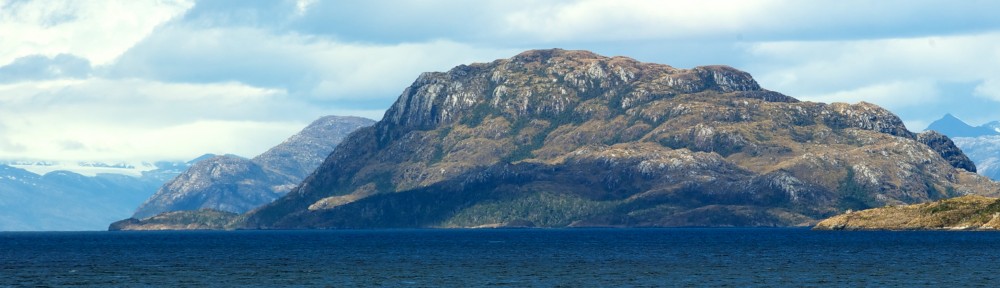
The Cape Horn Archipelago, a chain of wind-battered islands in the southernmost reaches of Chile, contains only a few tree species but a bounty of rare and unique mosses, according to William Buck, the curator of bryophytes at the New York Botanical Garden (map of Chile).
Bryophytes are a group of nonflowering plants that include mosses, liverworts, and hornworts.
Buck has traveled to the Cape Horn Archipelago each of the past four years to catalog the region’s mosses.
Inclement weather, rough seas, and a decades-long border dispute with neighboring Argentina have kept the archipelago pristine and unexplored. Many of the islands have never been studied, Buck says.
To date, he and his colleagues have documented numerous mosses previously unknown in the archipelago and several others that are new to science.
“I’m personally just interested in what mosses are there and how they are related to one another,” Buck said.
According to Buck, mosses are amazing plants because they can almost completely shrivel to nothing and enter suspended animation—in which all their vital functions cease—for years. Then, with a few drops of water, they can spring back to life.
Protected Area
But the findings, Buck adds, have aided local conservation efforts to bring greater environmental protections to the region and are helping to create a niche form of ecotourism.
“Like the Amazon is important for global diversity of primates and birds, [Cape Horn] is important for the diversity of bryophytes,” said Christopher Anderson, a postdoctoral research fellow with the Institute of Ecology and Biodiversity in Santiago, Chile.
In 2005, the United Nations Education, Science, and Culture Organization (UNESCO) approved a Chilean government application to declare the Cape Horn Archipelago a biosphere reserve.
The designation promotes sustainable development, conservation, and research of the approximately 12-million-acre (4.9-million-hectare) region.
Anderson, who is also a research associate with the University of Magallanes Omora Ethnobotanical Park, a public-private operation in the Cape Horn Archipelago, says the bryophyte research was instrumental in the establishment of the reserve.
“It put into the value the southern region of Chile compared to other places with higher diversity of larger, more easily recognizable taxa,” he said.
Unique Mosses
According to the New York Botanical Garden’s Buck, the geography of South America, which narrows to a point as it extends toward the South Pole, likely explains the bounty of mosses.
“A lot of things have real narrow distributions, partly because there’s no more land to be distributed on,” he said. “You also get a lot of fairly rare things down there.”
Anderson explains that while the diversity of most plants and animals decreases as latitude increases, the trend reverses for the bryophytes.
He said between 5 and 7 percent of the world’s mosses and liverworts are found in the Cape Horn Archipelago.
In the island chain, as in most parts of the world, mosses prevent erosion and maintain forest humidity, among other ecological services. The plants soak up water during rainstorms, which prevents excessive runoff, and then slowly release the water for several days after the storm.
“That keeps humidity in the forest fairly constant,” Buck said.
Tourism with a Hand Lens
Scientists and conservationists are now working with the Chilean government to put the Cape Horn Archipelago’s bryophytes in the spotlight of ecotourism.
The Magallanes and Chilean Antarctic Regional Government recently funded a series of guide books on the region, including the Miniature Forests of Cape Horn, which describes the mosses.
Now local guides in Puerto Williams, the capital city of the region, are being taught how to identify the mosses and liverworts, with the idea that they will take tourists to visit the “miniature forests,” Anderson says.
The concept, coined “tourism with a hand lens,” is already established at the Omora Ethnobotanical Park, Buck notes.
When visitors arrive at the park, they are given handheld magnifying glasses. “When they put it up to their eyes, they see a whole new world,” Buck said. “It’s the equivalent to using a telescope to look at the stars.”
OSARA Volunteering in Cape Horn
I arrived in the country a little over a month ago, flying from Quito to Punta Arenas, and, following a brief stint in Tierra del Fuego, have since been volunteering for Omora on Isla Navarino, in sub-antarctic Chile. I plan to be here for five or six months.
My arrival in Punta Arenas coincided with Dr. Christopher Anderson’s trip to Karukinka, a wildlife reserve in Tierra del Fuego owned by the Wildlife Conservation Society, so I went along. We spent about five days tramping around in peat bogs and lenga forests and up the sides of mountains collecting water samples from streams, lakes, and beaver ponds in order to evaluate the impact of invasive beavers on aquatic invertebrate diversity. Being late spring in southern Chile, the weather was wildly erratic, featuring hail, snow, wind, rain, and brilliant sunshine, not infrequently all in the same day.
Beavers were introduced into Tierra del Fuego for the fur trade in the 1940s, and have spent the intervening years generally wreaking havoc on the native forests. Their dams flood the surrounding area, drowning the roots of the trees, over time creating a patch of waterlogged ground and still standing, dead, decaying snags. These patches, scattered over the landscape, are clearly visible from the air.
I flew to Puerto Williams, my home for the next several months, on the 7th of November, riding in a tiny little plane over what I have heard are breathtaking views of Patagonia, the mountains, glaciers, etc. We, however, were enshrouded in a clouds almost the entire flight, so these allegedly majestic vistas remain to me a subject of myth. Puerto Williams is very, very small, a town of about 2,500 people on Isla Navarino, just across the Beagle Channel from Argentina. Easily more than half of the inhabitants are families with the Chilean Armada, only posted here for a few years, so the actual, permanent population is smaller yet.
A group of three bryologists arrived a couple days after I did to work on Tayloria, a genera of moss in the family Splachnaceae that grows obligately on animal feces and emits unpleasant odors from its mature sporophytes in order to attract spore-dispersing flies. I spent the next several days with them and two students from the University of Magallanes looking for moss populations in the Parque Omora and in local peat bogs. There are three species of Tayloria reported on the island, of which we were only able to find two, one, T. mirabilis, which grows in the lenga-coigue forests, and the other, which grows in the sphagnum bogs. The U. Magallanes students continued working with the moss after the bryologists headed back north, both trapping the flies attracted to the moss for identification and analysis and working on a study of the moss phenology.
Other than that, I’ve mostly been involved with birds. Omora spends six days every month banding birds caught in mist nets at two sites in the Parque Omora, one site in so for a week in November I left the house every morning at five with Rina, the research assistant, in order to open the nets by six. We band the birds, and then measure and weigh them before releasing them. Omora has amassed about 6,500 capture records over the last six years of regular banding.
The Institute of Ecology and Biodiversity, based at the University of Chile, has a couple hundred nest boxes in and around the park in order to study rayaditos (Aphrastura spinicauda). I worked for a couple days with two researchers from Santiago, banding and taking blood from the nestlings and parents, and running exploration and predation experiments with the adult birds. The data can be compared with similar data collected in Chiloe and Tierra del Fuego, in order to evaluate latitudinal differences in nesting behavior.
I’ve also spent a fair amount of time with Elke Schuttler, a PhD student studying the impact of invasive mink, a very recent arrival to the island, on ground nesting birds. She locates and monitors the nests of several species of coastal birds, as well as placing artificial nests, in order to observe predation and the impacts of that predation on native birds. We put out 150 artificial nests early last week, at six sites, and five days later ninety percent of them had been predated. The sites on rocky coasts seemed to have a much higher rate of predation by mink rather than native birds of prey such as caracaras. This is possibly significant considering that the number of kelp geese (Chloephaga hybrida), a species which nests obligately on rocky coasts, seems to be decreasing.
Yours, Clare