 The scientists and philosophers involved in the creation and implementation of the Cape Horn Biosphere Reserve are firmly committed to putting their research into practice. Part of this work involves the definition of the new trans-discipline of “biocultural conservation,” which requires overcoming significant challenges such as “translating” between academic disciplines, languages, cultures and ways of perceiving the world.
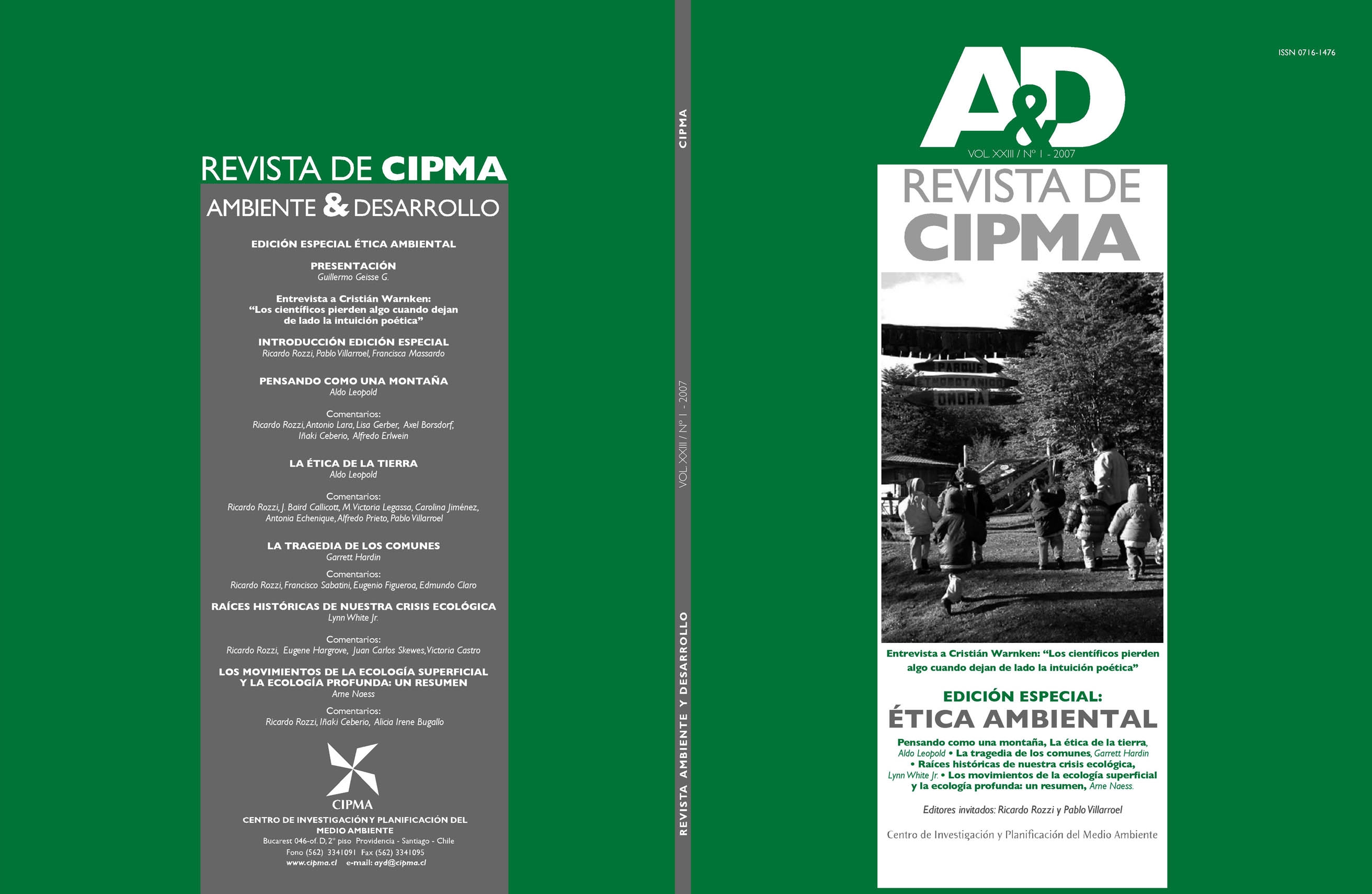
In this effort, Drs. Ricardo Rozzi and Francisca Massardo, as well as others from the CHBR, have been working for the past few years to create a seminal body of work that will serve as a foundation for environmental philosophy in Latin America and for biocultural conservation in general. Now a special edition of the journal Revista Ambiente y Desarrollo has publish these texts in Spanish and included commentaries from well-known thinkers from the realms of policy, ecology and philosophy from throughout the Americas and Europe. To learn more visit the CIPMA website, download the pdfs from the journal directly with the link above, or read the Introduction (in Spanish).