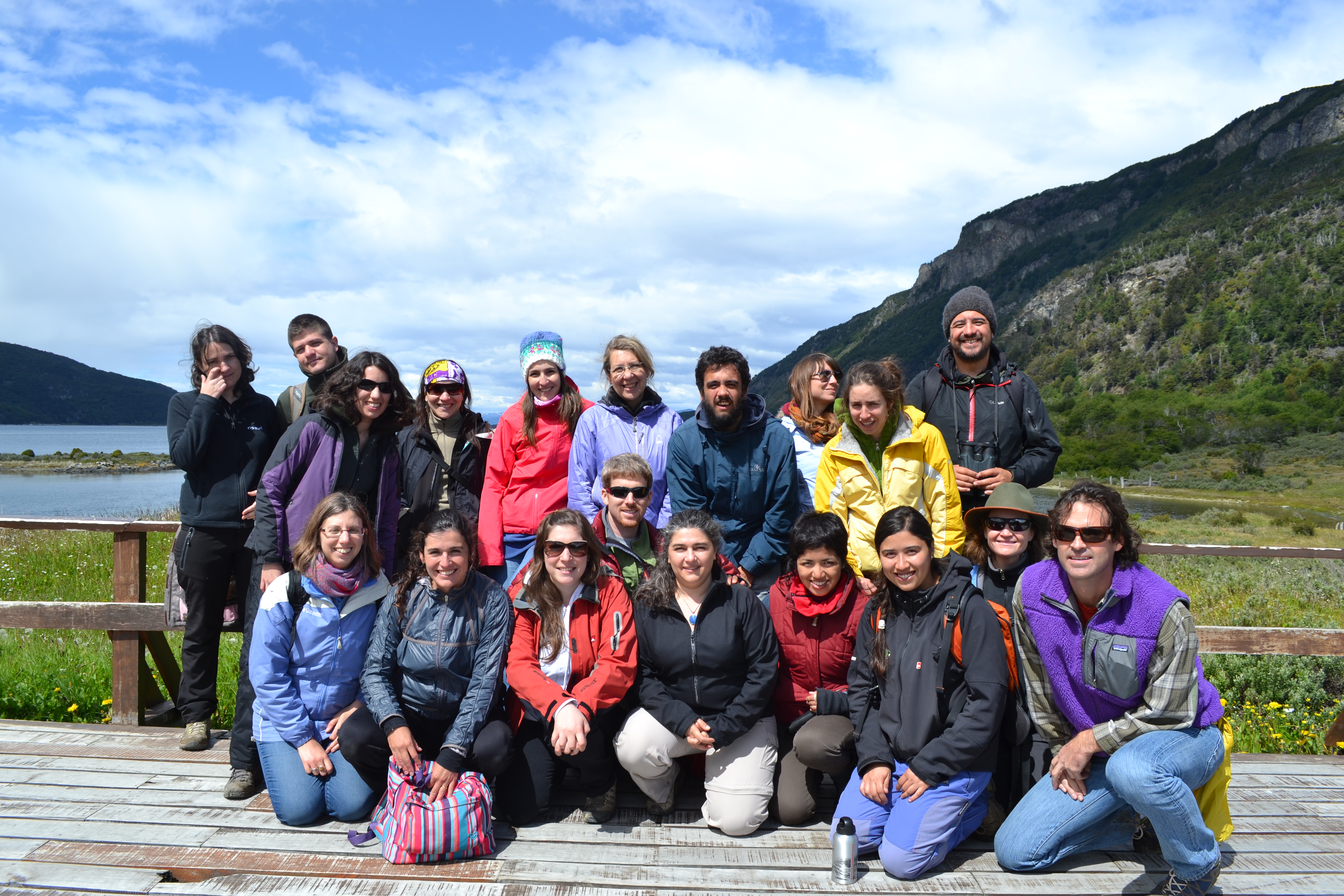
 With the support of U.S. National Science Foundation Grant (IIA 1261229) Patagonia Research Experiences for Students in Sustainability or “PRESS“, 5 undergraduate and graduate students from Northern Arizona University (NAU) arrived to Ushuaia, Tierra del Fuego to initiate their projects with Argentine mentors from a suite of partner institutions. In the coming years, the project will fund 7-8 students per year, and after the ending of the NSF funds the programs sustainability is ensured by being part of the Global Science and Engineering Program at NAU and internationalization efforts in Argentina. In 2015, OSARA is proud to coordinate the following projects.
Erik McCaughan, B.S. Biology, studying the trophic and population ecology of native southern river otters and invasive American mink under the guidance of Drs. Alejandro Valenzuela (Argentine National Parks Administration-APN and National University of Tierra del Fuego-UNTDF) and Laura Fasola (Austral Center for Scientific Research-CADIC). Tierra del Fuego & Santa Cruz Provinces, Argentina.
Faythe Duran, B.S. Biology, studying the soil conditions in a national observatory site for desertification under the guidance of Dr. Alicia Moretto (CADIC-UNTDF). Tierra del Fuego Province, Argentina.
Montana Johnson, B.S. Environmental Sciences, studying stream macroinvertebrate assemblages associated with different habitat types in Tierra del Fuego under the guidance of Dr. Christopher Anderson (CADIC-UNTDF). Tierra del Fuego Province, Argentina.
Taylor Oster, B.S. Environmental Engineering and B.A. Spanish, studying indicators of trail sustainability in Glaciers and Tierra del Fuego National Parks under the guidance of Laura Malmierca (APN). Tierra del Fuego & Santa Cruz Provinces, Argentina.
T.J. Schmidt, M.S. Climate Science & Solutions, studying the carbon footprint of the wool industry in Santa Cruz Province, Argentina under the guidance of Dr. Pablo Peri (National Institute of Agricultural Technology-INTA and National University of Southern Patagonia-UNPA). Santa Cruz Province, Argentina.
 Since 2012, Northern Arizona University and a suite of partners in southern Patagonia, coordinated by OSARA, have forged new and productive relationships in the area of conservation, socio-ecological research and sustainability science. The first fruit of this relationship was the NSF International Research Experience for Students grant, known as “
 The line of research of science and tourism, which is led by Ernesto Davis at the Center for Quaternary Studies (
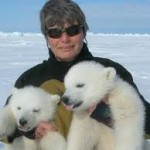 With the support of a CONICET grant to Dr. Christopher Anderson, concrete strides are being made to strengthen research between Tierra del Fuego and Alaska. From November 2014-February 2015, distinguished scientist Dr. Merav Ben-David from the University of Wyoming conducted a sabbatical at the Austral Center for Scientific Research (CADIC) in association with the Argentine National Parks Administration (APN). Dr. Ben-David is a recognized expert in wildlife biology and management, particular in polar and sub-polar biomes in North America, where she works with species like otters, mink, beaver and polar bears, among others.
 Yet again, OSARA has helped facilitate a successful Fulbright application to work in Patagonia. This time, Dr. Erik Nielsen from Northern Arizona University (NAU) will recieve the award to conduct a sabbatical from January till May 2016. During that time he will offer two courses at the National University of Tierra del Fuego. One will be on social dimensions of conservation and the other about interdisciplinary teaching practices for university professors. In addition, he will conduct research in association with the Austral Center for Scientific Research concerning the social and institutional aspects of conservation, including control of invasive beavers and restoration of native forests.
 A recent publication in the journal Ecological Restoration, led by Fulbrighter and NatGeo Young Explorer Jonathan Henn, finds that survival of transplated lenga (Nothofagus pumilio) seedlings in abandoned beaver meadows depends largely on the abiotic conditions of microhabitats within the meadow and the invasion of herbaceous (often exotic) plants. The research, coordinated under the guidance of Dr. Guillermo Martinez Pastur (ECO-Link Senior Personnel) and Dr. Christopher Anderson (ECO-Link PI), is the first pilot effort in Tierra del Fuego to conduct active forest restoration, which is one of the goals of the binational agreement between Chile and Argentina regarding the management of the invasive beaver.